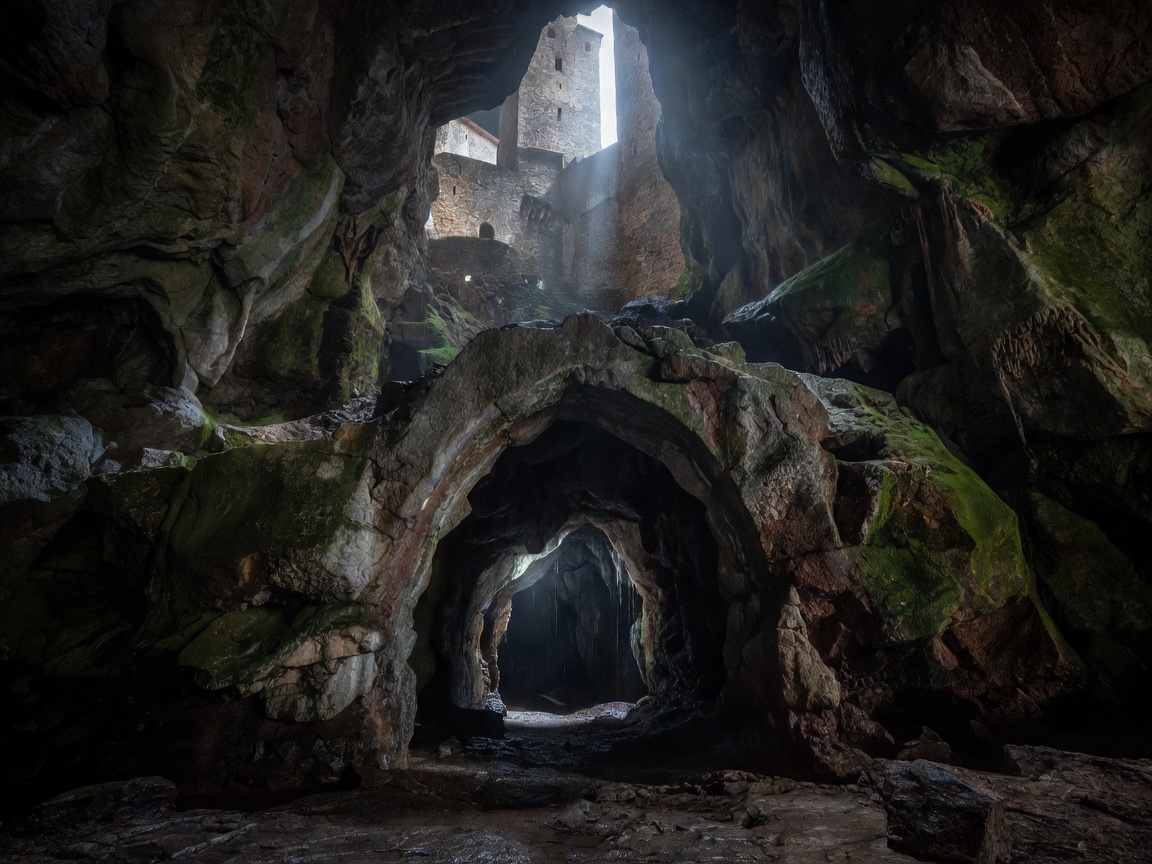
Hydrogeology of the Lokva Stream Sinkhole
The Predjama cave system (Jama pod Predjamskim gradom) is the second longest show-cave network in Slovenia, reaching a cataloged length of over 13,000 meters. Geologically, the complex represents an intricate multi-tier contact karst system shaped predominantly by the sinking Lokva stream.
Originating on impermeable Eocene flysch terrain, the Lokva reaches the vertical Cretaceous limestone cliff at Predjama and sinks into the bedrock at the base of the precipice at 468 meters above sea level. Dye tracing experiments conducted by karst hydrogeologists have confirmed that these sinking waters flow through subterranean siphons beneath the Javornik hills, ultimately resurging miles away in the Vipava River valley.
The Four Distinct Cave Tiers
The system's most remarkable speleological feature is its vertical compartmentalization into four separate horizontal levels, each reflecting an older phase of regional river erosion:
- Erazem's Hole (Top Gallery): The highest, oldest tier. This dry passage exits via a vertical chimney onto the wooded summit of the limestone ridge above the cliff. Historically, this secret passage allowed the fifteenth-century robber baron Erasmus of Lueg to smuggle fresh provisions into the besieged castle without the knowledge of the surrounding imperial troops.
- Castle Level Cavern: The cavernous hollow directly behind the masonry of the Renaissance fortress, functioning as natural basements, armories, and cistern collectors.
- The Stable (Hlev): An intermediate dry gallery accessible by staircase, historically utilized to shelter horses and livestock during winter or warfare.
- The Active Water Conduit: The lowest tier, where the Lokva stream continues active chemical and mechanical excavation through boulder chokes and flooded siphons.
Speleo-Archaeology and Prehistoric Occupation
Archaeological excavations within the entrance chambers and the "Fiženca" passage have revealed extensive stratifications of prehistoric human habitation. The cave provided natural shelter from the Eneolithic (Copper Age) through the Bronze and Iron Ages. Artifacts recovered include primitive bone awls, polished stone axes, and diagnostic ceramics associated with the prehistoric Ljubljansko Barje cultures.
During the Roman period, the entrance served as a defensive vantage point monitoring the post-road between Aquileia and the Danube basin, emphasizing the prolonged human reliance on natural karst defenses.
Chiropteran Hibernaculum Management
The upper chambers and dry shafts of the Predjama system maintain exceptionally stable winter temperatures and micro-climates, creating critical hibernation sites (hibernacula) for several bat species of European conservation concern.
Prominent populations include the Mediterranean horseshoe bat (Rhinolophus euryale), the greater horseshoe bat (Rhinolophus ferrumequinum), and Geoffroy's bat (Myotis emarginatus). In accordance with the EU Habitats Directive, the subterranean galleries below the castle are completely sealed against human visitors from October to May each year to prevent fatal metabolic awakening of roosting bats.
Visitor Experience: Guided Speleology vs. Self-Guided Castle
While the built fortress above operates regular acoustic tours, exploring the deeper karst galleries requires distinct speleological equipment and specialized environmental permits.
- Access to Fiženca and the Wind Hole (Vetrovnica)
- Flashlights, helmets, and slip-resistant footwear provided
- Direct inspection of geological contact zones and fossils
- Small supervised groups (maximum 10 participants)
- No electric lighting beyond the initial stable threshold
- Strict seasonal blackout during bat hibernation (October–May)
- High humidity and slippery clay inclines
- Unsuitable for visitors with limited mobility